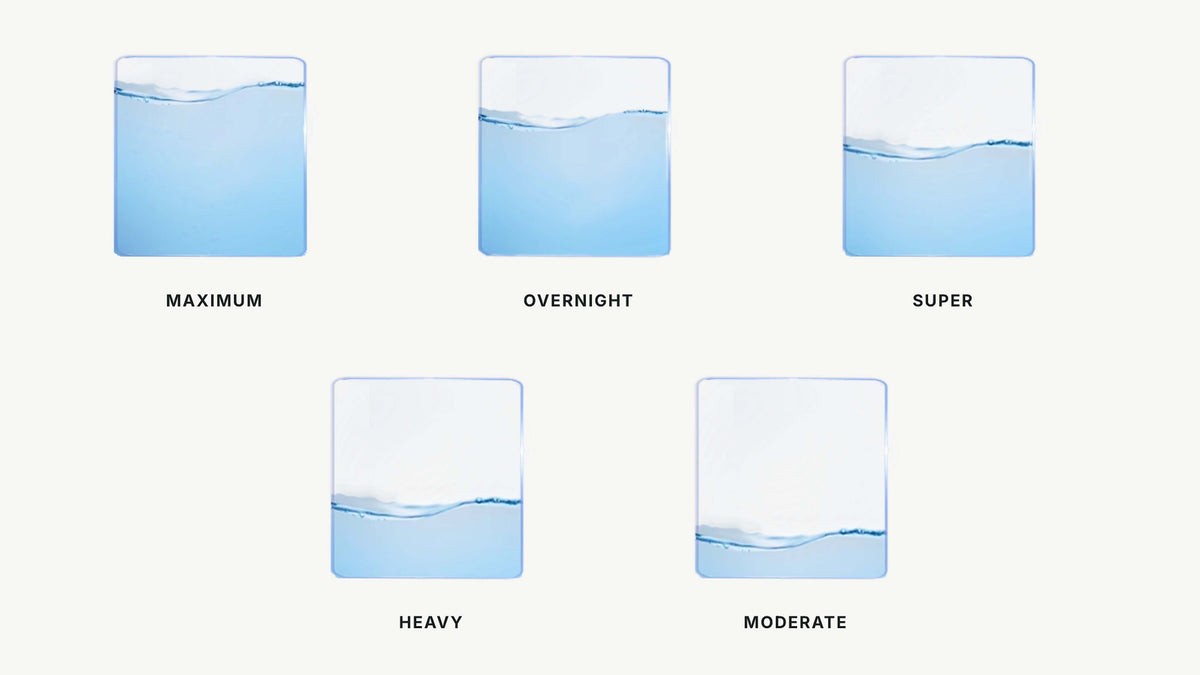
When choosing adult diapers, one of the most common questions is: how much liquid can an adult diaper actually hold?
The answer depends on product design, absorbent materials, size, fit, and intended use. Some products are designed for light daytime protection, while others provide higher-capacity support for heavier leakage or overnight care.
As a general editorial reference, adult diaper capacity categories may range from around 8–12 ounces (250–350 ml) for light protection to more than 34 ounces (1,000 ml) for maximum or overnight products.
Maximum capacity does not tell the entire story. Real-world protection also depends on how quickly liquid enters the core, how evenly it spreads, how well it is retained under pressure, and how the product fits the body.
How Much Liquid Can Adult Diapers Hold?
The following framework keeps capacity references consistent across these SUNKISS articles:
| Absorbency Level | General Capacity Range | Best For |
|---|---|---|
| Light | Around 8–12 oz (250–350 ml) | Small leaks and occasional protection |
| Moderate | Around 12–20 oz (350–600 ml) | Daily daytime protection |
| Heavy | Around 20–34 oz (600–1,000 ml) | Frequent leakage and stronger protection |
| Maximum / Overnight | 34 oz+ (1,000 ml+) | Nighttime and higher-capacity protection |
Important: These ranges are general editorial references, not universal industry standards or guaranteed capacities. Actual performance varies by product, size, materials, fit, usage, and test method.
What Determines Real-World Capacity?
- Absorbent-core design
- Acquisition and distribution layers
- Liquid flow rate
- Retention under sitting or lying pressure
- Body position and movement
- Product size, shape, and fit
- Application and leak-guard positioning
- The laboratory test method
A product tested under controlled conditions may perform differently during everyday use. Maximum laboratory capacity is not the same as usable capacity before leakage or unacceptable wetness.
How Much Urine Does an Adult Produce?
Urine volume varies substantially according to fluid intake, medication, health conditions, kidney function, bladder habits, and the time between bathroom visits. A single “typical” void volume should not be used to select protection for every person.
When accurate information is needed, a healthcare professional may recommend a bladder diary that records:
- Drink times and amounts
- Urination times and measured volumes
- Urgency and leakage
- Bedtime and nighttime awakenings
Sudden or unexplained changes in urine volume should be medically assessed.
What Makes a High-Capacity Adult Diaper Different?
Larger or Strategically Positioned Absorbent Area
A larger or differently shaped core can provide more storage and position absorbency where it is most needed.
Efficient Liquid Distribution
A distribution layer helps move liquid through the core instead of allowing it to collect in one place.
Retention Under Pressure
A product must retain moisture while the user sits, walks, lies down, or changes position. A high maximum capacity does not automatically mean low surface rewet.
Coverage and Leak Guards
Broad coverage and correctly positioned inner guards help contain liquid while it enters the core.
Why Can a High-Capacity Diaper Still Leak?
Liquid Arrives Too Quickly
A large bladder release may reach the product faster than it can absorb, causing temporary pooling near an opening.
Liquid Does Not Distribute Evenly
One section can become saturated while other absorbent material remains unused.
The Size Is Incorrect
- A product that is too large may leave gaps around the legs or waist.
- A product that is too small may provide insufficient coverage or distort the core.
The Product Is Misaligned
A folded core, uneven tabs, or inward-facing leak guards can allow liquid to escape before absorption.
The Core Has Reached Its Practical Limit
Pressure and repeated wetting can cause rewet or leakage before the advertised laboratory maximum is reached.
How Laboratory Ratings Compare With Real Use
Manufacturers may advertise capacities above 34 ounces (1,000 ml), depending on the product and test method. Before comparing numbers, determine whether the figure represents:
- Maximum absorption under controlled conditions
- Retention after drainage or pressure
- Performance after repeated wettings
- Usable capacity under a particular product test
A product with a lower laboratory maximum may perform better for a particular user when it offers faster intake, better distribution, more suitable coverage, and a more secure fit.
Choosing the Right Capacity
For Light Daily Protection
Begin by considering light protection for occasional small urinary leaks. Move to a higher level when the amount, speed, or frequency of leakage requires it.
For Frequent Leakage
Heavy protection may suit repeated or larger releases, provided the product fits correctly and can be changed when needed.
For Overnight Care
Consider retention under pressure, front-to-back coverage, sleeping position, leak guards, and nighttime output—not capacity alone.
For Bowel Incontinence
Prioritize containment, convenient removal, prompt changing, gentle cleansing, and skin protection. Remaining urine capacity does not justify delaying a change after a bowel movement.
Do You Always Need the Highest Capacity?
No. A higher-capacity product may add bulk, heat, cost, or movement restriction without providing a meaningful benefit for lighter leakage.
The best choice balances:
- Usable absorbency
- Intake speed and distribution
- Fit and coverage
- Mobility and changing method
- Skin condition
- Comfort and personal preference
Changing and Skin Care
Capacity does not establish a universal safe wear time. Change the product:
- Promptly after a bowel movement
- Whenever it is wet, soiled, leaking, or uncomfortable
- According to the product instructions
- According to the user's continence and skin-care plan
Do not wait for a product to reach its advertised maximum capacity.
Frequently Asked Questions
How much liquid can an adult diaper hold?
In this editorial framework, capacity ranges from approximately 8–12 ounces (250–350 ml) for light protection to more than 34 ounces (1,000 ml) for maximum or overnight products. Actual results depend on the exact product and test method.
What is the most absorbent adult diaper?
Maximum or overnight products often have higher stated capacity, but real-world performance also depends on intake speed, distribution, retention under pressure, and fit.
Are higher-capacity adult diapers better?
Not automatically. Select enough usable absorbency for the user's output while also considering comfort, mobility, skin health, and changing access.
Can an adult diaper last all night?
Some products are designed for overnight use, but no fixed duration applies to everyone. Change after bowel movements and whenever the product is wet, soiled, leaking, or uncomfortable.
Can a booster pad increase capacity?
A manufacturer-compatible flow-through booster may add absorbency. Do not insert a waterproof-backed pad unless specifically permitted, because it may block liquid transfer and increase leakage.
Find High-Capacity Protection With SUNKISS
SUNKISS offers adult incontinence products for different absorbency, fit, daytime, and overnight needs. Compare the exact product specifications and test information with the user's real care situation.
Explore SUNKISS Adult Incontinence Products
This article provides general educational information and does not replace individualized advice from a healthcare or continence professional.