

Adult incontinence care is an established part of modern healthcare. With an appropriate product, timely changing, gentle skin care, and respect for individual preferences, users can maintain comfort, dignity, and as much independence as possible.
This guide introduces common absorbent products and explains factors to consider when choosing and using them. It does not replace an individualized continence assessment or hands-on caregiver training.
Understanding Common Incontinence Products
Tab-Style Adult Diapers
Tab-style briefs have adjustable fasteners at the sides. They may be suitable for people who:
- Spend most of their time in bed
- Need caregiver-assisted changing
- Cannot safely stand during a change
- Need moderate to heavy absorbency, depending on the product
- Benefit from adjustable waist and leg fitting
The open-sided design allows a caregiver to position the product while the user is lying down, provided the caregiver has been trained in safe handling and repositioning.
Pull-Up Protective Underwear
Pull-up products are worn similarly to regular underwear. They may be appropriate for people who:
- Can stand, walk, or participate safely during changing
- Prefer a familiar underwear-like style
- Need light to moderate protection, depending on the product
- Want to maintain independent toileting skills
Pull-ups are not automatically easier for a person who is fully dependent, cannot bear weight, or cannot safely place their feet through the leg openings. In those situations, a tab-style brief may be safer and more practical.
Choose the Product for the Individual Situation
Consider the following before selecting a product:
- Mobility: Can the person stand, walk, transfer, or assist during a change?
- Type of leakage: Is the product needed for urine, stool, or both?
- Amount and pattern: Is leakage occasional, moderate, heavy, daytime, or overnight?
- Dexterity and cognition: Can the person recognize the need to change and manage the product safely?
- Skin health: Is there redness, fragile skin, a wound, or risk of pressure injury?
- Care setting: Will changes occur independently, at home, or with professional assistance?
- Personal preference: Which style best supports comfort, privacy, and dignity?
Practical Product Selection
- For a person who remains in bed and needs full assistance, a tab-style brief is often easier to position and check.
- For a person who can stand or walk safely, a pull-up may support independence.
- For overnight use, choose a product whose tested absorbency, fit, and coverage match the person's output and care plan.
- For bowel incontinence, prioritize prompt changing, access for cleansing, secure containment, and skin protection.
Caring for Someone Who Has Difficulty Cooperating
A person may have difficulty participating because of pain, sedation, delirium, dementia, weakness, involuntary movement, fear, or difficulty understanding instructions. Resistance can also signal discomfort or an unmet need.
Caregivers should:
- Explain each step calmly and use simple language.
- Check for pain, fear, urgency, cold, embarrassment, or confusion.
- Offer choices whenever possible.
- Allow extra time rather than forcing the change.
- Use the person's established transfer and repositioning plan.
- Ask another trained caregiver to assist when required.
- Follow facility policy and professional guidance.
Do not attempt an unsafe lift or transfer alone. Side-lying is useful for some bed-based changes, but it is not automatically safe for everyone. Surgical precautions, injuries, breathing problems, lines, tubes, and pressure injuries may require a different position.
How to Put On Pull-Up Protective Underwear Independently
- Check the size and identify the front and back.
- Sit on a stable surface if this reduces fall risk.
- Place each foot through a leg opening.
- Pull the product over the hips and up to the waist.
- Smooth the waistband and make sure the absorbent area is centered.
- Check that the leg openings fit securely without folding or deep pressure marks.
How to Assist Someone With Pull-Up Underwear
Use pull-ups only when the person can safely participate or when caregivers have appropriate equipment and training.
- Explain the change and provide privacy.
- Use the person's approved sitting, standing, or transfer method.
- Guide each foot through a leg opening without twisting the knees or hips.
- Pull the product evenly over the hips while maintaining safe support.
- Center the absorbent core and check the waistband and leg openings.
Important: Tear-away side seams are generally intended to make a used pull-up easier to remove. Once torn, standard pull-ups usually cannot be worn again. Do not tear and lay a pull-up flat beneath a user unless that specific product has manufacturer-approved refastenable sides.
How to Assist Someone With a Tab-Style Adult Diaper
The following is a general overview, not a substitute for safe-handling instruction:
- Gather supplies, explain the procedure, wash your hands, and provide privacy.
- Position the person according to their approved mobility and repositioning plan.
- Remove the used product, cleanse gently, dry the skin, and inspect it.
- Place the back panel beneath the hips with the product centered.
- Bring the front panel between the legs and over the lower abdomen.
- Fasten the tabs symmetrically according to the product instructions.
- Unfold the leak guards and check for a secure fit without constriction.
Avoid dragging the product or the person's skin across the bed. Use appropriate repositioning equipment and assistance when required.
Skin Care During Every Change
- Cleanse the skin gently after urine or stool exposure.
- For vulvar or perineal care, wipe from front to back to reduce transfer of stool toward the urinary opening.
- Pat the skin dry rather than rubbing.
- Inspect for persistent redness, rash, pain, broken skin, pressure marks, or signs of infection.
- Apply a suitable moisture barrier when recommended by the care plan.
- Apply a fresh, correctly fitted product.
Seek clinical advice for persistent or worsening skin damage. Absorbent products do not replace pressure-injury prevention, repositioning, or wound care.
Practical Care Advice
Choose the Correct Size
Measure the waist, abdomen, and hips, then compare the largest relevant circumference with the current product size chart. A loose product may leave gaps; an overly tight product may cause friction and pressure.
Change According to Need
There is no universal three- or four-hour schedule suitable for everyone. Check the product regularly and change it:
- Promptly after a bowel movement
- Whenever it is wet, soiled, leaking, or uncomfortable
- According to the manufacturer's instructions
- According to the person's continence and skin-care plan
Dispose of Products Properly
Roll the used product inward, secure it when disposal tabs are provided, and place it in an appropriate waste container. Do not flush adult diapers or pull-ups down the toilet.
Add Protection Carefully
A compatible booster pad may increase absorbency when the manufacturer permits it. Do not place a waterproof-backed pad inside another absorbent product unless specifically instructed, as this may block fluid transfer and increase leakage.
An absorbent underpad or waterproof mattress protector may help protect furniture or bedding, but it should not replace timely checking and changing.
Important Care Principles
- Communicate before and during every step.
- Protect privacy and expose only the area being cared for.
- Encourage safe participation and independence.
- Do not rush, force, or shame the person.
- Follow infection-control and hand-hygiene procedures.
- Document relevant output, skin changes, and care concerns when required.
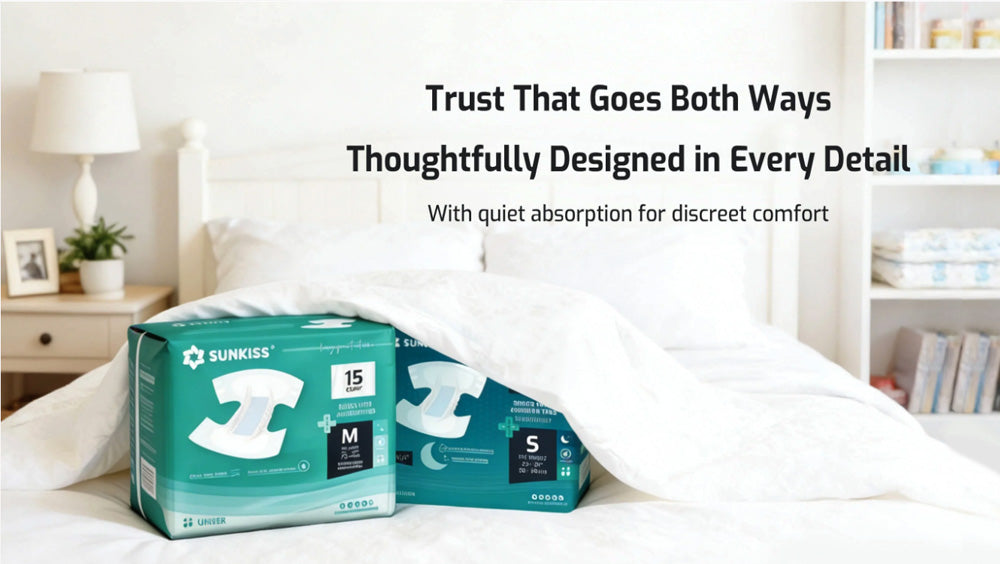
SUNKISS Product Options
SUNKISS Pull-Up Protective Underwear
SUNKISS pull-up products may be suitable for people with enough mobility to stand, walk, or participate safely during changing. Their underwear-like form may support independence and familiarity.
Confirm the absorbency, sizing, tear-away side design, and intended use on the individual product page before selecting a style.
SUNKISS TrustPlus Series
The TrustPlus Series is designed for tab-style daytime or overnight care, depending on the selected model.
Product features may include:
- A dual-core absorbent structure
- A wetness indicator
- Raised leak guards
- Soft inner materials
- Structural support intended to reduce sagging
Features and absorbency differ by product and size. Verify all claims on the current product listing.
SUNKISS Masterpiece Series
The Masterpiece Series is designed for users seeking a higher-capacity tab-style product with adjustable fitting and multiple color choices.
Product features may include:
- A stated maximum absorbency of up to 6,000 ml under the applicable SUNKISS test conditions
- Adjustable fastening tabs
- An elastic waistband and raised leak guards
- A reinforced structure intended to maintain shape
- Pink, white, and blue color options
Laboratory maximum absorbency is not the same as recommended wear capacity. Actual performance depends on fit, output, movement, pressure, application, and timely changing. Confirm the current test documentation before publishing the 6,000 ml claim.
When to Seek Medical Advice
Incontinence may have treatable causes. Contact a healthcare professional if symptoms are new, worsening, painful, unexplained, or affecting daily life. Seek prompt medical attention for:
- Blood in the urine or stool
- Pain or burning during urination
- Fever, chills, confusion, or pain in the back or side
- Difficulty urinating or being unable to urinate
- Sudden loss of bladder or bowel control
- New leg weakness, groin numbness, or severe back pain
Supporting Comfort, Dignity, and Independence
The right product and care method can help manage leakage and support daily comfort. The goal of care is not unnecessary restriction; it is to protect health, dignity, autonomy, and quality of life.

1 comment
James Dexter
With Men’s Protective Underwear how to tell the front from the back.
With Men’s Protective Underwear how to tell the front from the back.